

Skip to Content

I & J

Data Innovation 

Founded in 1910 in Cape Town, I&J has grown into one of South Africa’s most established fishing companies, operating a fleet of 10 modern deep-sea trawlers and employing more than 1,560 people. The company plays a vital role in the nation’s food supply chain, harvesting from the rich trawling grounds of the south-east Atlantic Ocean. 

In an industry where efficiency, sustainability, and timing are critical, the availability of accurate and real-time data across the entire value chain, from vessel operations to shore-based planning, is essential. 

I&J’s data sources span manual entry, machinery and equipment, and third-party systems, making the management and integration of this information both complex and business-critical.

“Data is absolutely critical for the effective running of I&J’s operations. CBOS was instrumental in creating a reliable solution for us. Their innovation and expertise in creating technically advanced solutions are impressive.”

I&J Logo
Robert Landman
Business Insights Manager, I&J

Key aspects of the project


Sea-to-Shore

Real-time, two-way data flows between vessels and shore eliminated blind spots, ensuring operational decisions are based on what’s actually happening at sea, not delayed or incomplete reports.


IoT-Driven Operational Intelligence

By automating data capture directly from onboard equipment and systems, the solution transformed raw vessel data into reliable, actionable insight—reducing manual input, errors, and guesswork.


Predictive Efficiency

Integrated analytics and centralised visibility enabled proactive scheduling, predictive maintenance, and smarter planning across the entire fleet, improving yield while reducing downtime and operational cost.

Challenge

Critical operational data was captured manually and in silos, creating delays, blind spots, and reactive decision-making across I&J’s fleet and shore-based planning teams.

In the high-stakes world of deep-sea fishing, where timing, precision, and efficiency directly impact profitability, I&J’s ability to harness and act on its data was being compromised by outdated processes and fragmented systems:

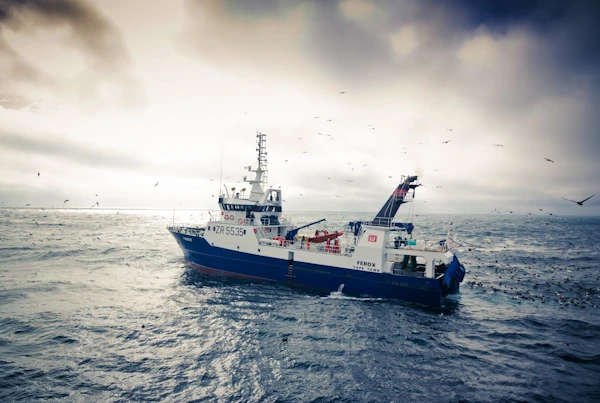
I&J Marketing Image


  • Manual and Irregular Data Capture: Much of the critical information generated on vessels—ranging from trawling activity to engineering logs—was still collected manually. Transmission of this data back to shore was often inconsistent and delayed, leaving managers with incomplete or outdated insights. This lag created an operational blind spot between what was happening at sea and what could be acted upon onshore.
  • Disparate and Complex Data Sources: The company’s data ecosystem was highly fragmented, pulling from a wide array of sources including trawling equipment sensors, onboard machinery, crew-entered records, and third-party systems. Each of these streams operated in isolation, with no seamless integration to consolidate them into a single, reliable view. The lack of interoperability made it nearly impossible to establish data accuracy, consistency, and timeliness across the organisation.
  • Limited Technical Capability: Without the right integration tools, data enrichment processes, or real-time analytics, I&J was unable to convert raw data into actionable intelligence. This restricted the ability of managers and crews alike to make informed, fast decisions. Insights that should have driven preventative maintenance, fuel efficiency, or optimal catch scheduling were instead trapped in silos or lost in translation.
  • Operational and Financial Impact: The consequences of these shortcomings were significant. Scheduling became reactive rather than predictive, production planning was frequently misaligned with actual catch data, and preventative maintenance suffered—leading to higher downtime, increased repair costs, and unnecessary strain on equipment. Collectively, these inefficiencies placed pressure on margins in an industry where every voyage, every trawl, and every hour at sea carries financial weight.
Solution

We implemented a real-time, IoT-driven data platform that links vessel operations with onshore planning and decision-making.

CBOS partnered with I&J to design and implement a robust, future-ready data framework tailored to the unique challenges of the fishing industry:

  1. IoT-Enabled Data Architecture

    • Developed a solution architecture built around an IoT framework capable of connecting directly to onboard machines and equipment.
    • Automated the capture of engineering and trawling data at source, significantly reducing manual input and error rates.
  2. Mobile and Vessel-Based Applications

    • Introduced mobile applications for crew members to record operational and engineering data on the spot.
    • Deployed vessel-based applications to provide on-site management and administrative oversight, ensuring consistency and accuracy in data entry.
  3. Satellite-Enabled Connectivity

    • Implemented satellite links between vessels and shore, enabling immediate two-way data transfer.
    • Ensured that scheduling data, catch reports, and operational instructions could flow in real time, guiding vessels to the best fishing locations and supporting responsive decision-making.
  4. Shore-Based Integration

    • Built a centralised application onshore to consolidate incoming data, enrich it with business context, and feed it into I&J’s planning processes.
    • Provided management with visibility across the fleet, empowering them to make better, faster, and more informed decisions.

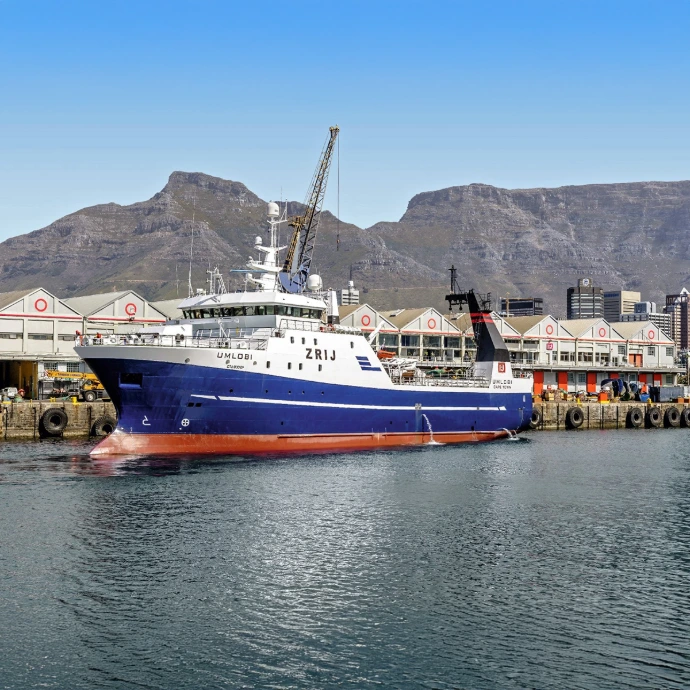
    I&J Fishing Vessel

Impact

Real-time data transformed fleet efficiency, decision-making, and operational resilience.

The new data innovation framework has transformed I&J’s operations by enabling seamless two-way data flows between vessels and shore, ensuring management teams always have access to accurate, real-time information. This visibility has improved scheduling and production planning, reducing inefficiencies and increasing overall yield across the fleet. 

The system has also unlocked significant cost savings through predictive and preventative maintenance, minimising downtime and extending the lifespan of critical equipment. With mobile and vessel-based tools in place, both onshore and onboard teams are now empowered to make faster, more informed decisions, backed by greater accountability and a unified view of operations. 

Most importantly, the solution has given I&J a scalable and future-proof digital backbone, positioning the company to adopt new technologies and adapt to evolving industry demands with confidence.

I&J Fishing Vessel

Sea-to-Shore  Visibility

Real-time operational insight

IoT-Driven Data 
Capture

Automated vessel data at source

Predictive
Fleet Efficiency

Smarter maintenance and planning

Future-Ready Backbone

Scalable, resilient, and adaptable

Let's Connect

Interested in building a smarter, more connected operation? Contact us to discuss how bespoke software can support your business goals.