
Skip to Content

Bespoke Software

Bespoke Software Development is about building technology around the way your business needs to operate.

Every business has its own processes, customers, systems, rules, data, challenges, and competitive advantages. Off-the-shelf software can solve many common requirements, but there comes a point where businesses need technology that is designed specifically for them.

CBOS designs and develops custom software applications, platforms, portals, mobile solutions, integrations, and business systems that solve specific operational problems and support the way an organisation actually works.

From replacing spreadsheets and manual processes to modernising legacy systems or creating entirely new digital products, we build software that becomes part of the way the business operates.

“CBOS is a partner that ticks all the boxes within our business and is an integral part of our team and business. Always helpful, pleasant to deal with, diligent in their approach, and the relationship goes deeper than purely a customer and provider relationship.”

Bridgestone Logo
Christo Jansen van Rensburg
Divisional Head, Bridgestone South Africa Retail.

Bespoke Software 

Bespoke Software Development is about building technology around the way your business needs to operate.

Every business has its own processes, customers, systems, rules, data, challenges, and competitive advantages. Off-the-shelf software can solve many common requirements, but there comes a point where businesses need technology that is designed specifically for them.

CBOS designs and develops custom software applications, platforms, portals, mobile solutions, integrations, and business systems that solve specific operational problems and support the way an organisation actually works.

From replacing spreadsheets and manual processes to modernising legacy systems or creating entirely new digital products, we build software that becomes part of the way the business operates.

“CBOS is a partner that ticks all the boxes within our business and is an integral part of our team and business. Always helpful, pleasant to deal with, diligent in their approach, and the relationship goes deeper than purely a customer and provider relationship.”

Bridgestone Logo
Christo Jansen van Rensburg
Divisional Head, Bridgestone South Africa Retail.
Bespoke Software Breakdown

Key aspects of our Bespoke Software


Built around your business

Every solution starts with your business requirements, processes, users, and objectives. Rather than forcing your organisation into an existing product, we design software around how your business needs to operate, solving the specific challenges that matter while supporting greater efficiency, control, and long-term value.


End-to-End Delivery

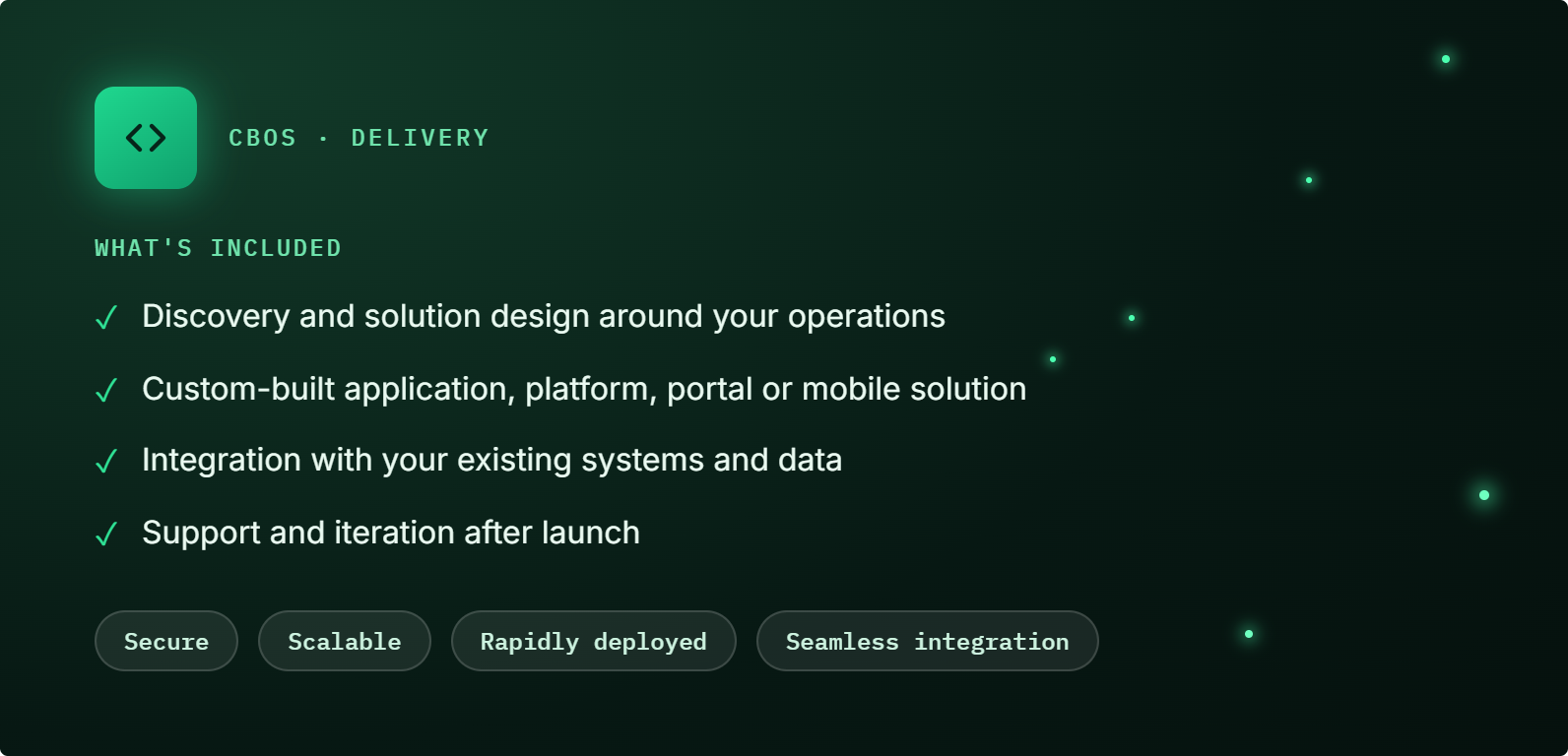
CBOS manages the complete software journey, from understanding the requirement and designing the solution through development, integration, deployment, and ongoing improvement. This creates continuity across the project and ensures the technology, infrastructure, security, data, and user experience work together.


Designed to Evolve

We design software that can grow as your business changes. Solutions are built to integrate with your existing technology environment while supporting new users, processes, systems, automation, data capabilities, and AI functionality over time, helping your investment remain relevant, scalable, and valuable into the future.

Key aspects of our Bespoke Software


Built around your business

Every solution starts with your business requirements, processes, users, and objectives. Rather than forcing your organisation into an existing product, we design software around how your business needs to operate, solving the specific challenges that matter while supporting greater efficiency, control, and long-term value.


End-to-End Delivery

CBOS manages the complete software journey, from understanding the requirement and designing the solution through development, integration, deployment, and ongoing improvement. This creates continuity across the project and ensures the technology, infrastructure, security, data, and user experience work together.


Designed to Evolve

We design software that can grow as your business changes. Solutions are built to integrate with your existing technology environment while supporting new users, processes, systems, automation, data capabilities, and AI functionality over time, helping your investment remain relevant, scalable, and valuable into the future.

The Pain Point

Existing technology often creates friction when systems, processes, and business requirements no longer work effectively together.

Businesses often reach a point where their existing systems can no longer support the way they need to operate.

Processes may have evolved over many years, with technology added incrementally along the way.

The result is often a mixture of spreadsheets, emails, manual approvals, disconnected software platforms, duplicated information, legacy applications, and employees filling the gaps between systems.

In other cases, an organisation may already use an established ERP, CRM, accounting platform, or industry-specific application, but there are important parts of the business that those systems simply do not address.

Off-the-shelf software can then begin determining how the business operates rather than supporting how the business should operate.

The need was clear: Gallo Images required a trusted technology partner that could stabilise their existing systems, modernise their architecture, and help them pivot towards continuous innovation in a dynamic and highly competitive market.


This creates major problems:

  • Employees spend time performing repetitive administrative tasks.
  • The same information is captured in multiple systems.
  • Processes depend heavily on spreadsheets, email, or individual employees.
  • Management struggles to obtain a single view of the business.
  • Existing systems do not communicate with one another.
  • Important processes are difficult to control or audit.
  • Customers and staff experience fragmented digital journeys.
  • Legacy systems become difficult and expensive to maintain.
  • Growth creates additional administration instead of greater efficiency.
  • Businesses compromise their processes to fit the limitations of existing software.

The problem is not always that a business needs more software. Often, it needs better-connected software designed around the way the organisation actually needs to work.
What CBOS Offers

CBOS creates purpose-built software around your organisation, connecting processes, people, data, and existing technology.

CBOS designs and develops software specifically around your organisation, its processes, its users, and its objectives.

Rather than starting with a predefined product and trying to make the business fit into it, we start by understanding the problem.

  • What needs to happen?
  • Who needs to use the system?
  • Where does the information come from?
  • What business rules need to be applied?
  • What existing systems must remain?
  • Where are people currently performing unnecessary manual work?
  • What does management need to see?
  • What should the customer experience look like?
  • We then design the technology around those requirements.

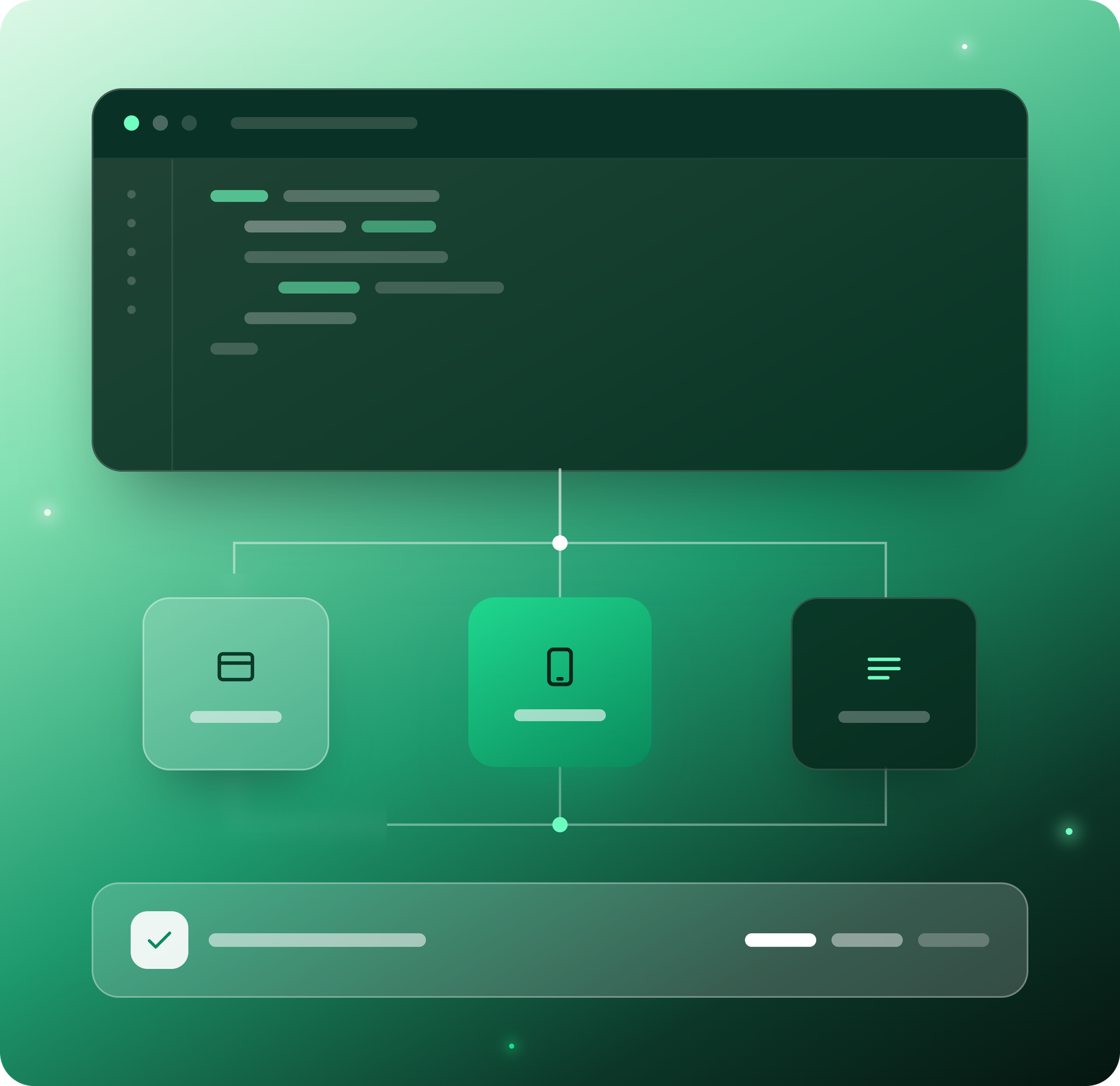
The result may be a complete business platform, a customer portal, an internal operational application, a mobile application, a workflow system, an integration layer, or a combination of several technologies working together.


CBOS can take a business from: “We have people, spreadsheets and systems trying to hold this process together.”

to: “We have one digital process that manages it properly.”

How it Works

We take your solution from understanding the business requirement through design, development, integration, deployment, and ongoing evolution.

Bespoke development starts with understanding the business before deciding what technology should be built.

Understand

We work with stakeholders to understand the organisation, its objectives, existing technology, users, processes, pain points, and opportunities.


This may include:

  • Business processes
  • Existing applications
  • Manual workflows
  • Spreadsheets
  • Reporting requirements
  • Customer journeys
  • Approval processes
  • Data sources
  • Security requirements
  • User roles
  • Existing infrastructure
  • Integration requirements
  • Future growth requirements

The objective is not simply to document what happens today. It is to understand what the business is trying to achieve and where technology can improve it. 

Design

We translate the business requirements into a practical software solution that reflects how the organisation operates and what it needs to achieve. The design considers the overall structure of the application, how users interact with it, how information and workflows are managed, and how it will connect with the wider technology environment. It also establishes the foundations for security, reporting, mobile access, infrastructure, and future growth.

The aim is to create a solution that is practical today while providing a strong foundation that can evolve with the organisation.

Build

Our development teams turn the agreed solution into working software.

Development is iterative, allowing functionality to be reviewed and refined as the project progresses rather than waiting until the end to determine whether the system meets the business requirement.

Integrate

Most bespoke systems do not operate in isolation.

CBOS connects new software to the platforms and information already used by the organisation so that data and processes can move between systems without employees having to act as the connection between them.


Solutions can integrate with environments such as:

  • ERP, CRM, and accounting systems
  • Microsoft 365 and identity platforms
  • Payment and financial services
  • Data warehouses and reporting platforms
  • Cloud platforms and external APIs
  • Supplier and customer systems
  • Existing business applications
  • Legacy or industry-specific systems

Deploy

Once the solution is ready, we manage the technical process of taking it into a live production environment.

This includes the infrastructure, databases, security, access, testing, monitoring, backups, and production configuration required to operate the solution reliably.

Evolve

A business does not stop changing once the software goes live.

New requirements emerge, processes improve, integrations are added, and technology continues to develop.

CBOS can continue supporting and enhancing the platform so that the software evolves with the organisation rather than gradually becoming another legacy system.

What We Can Build

From operational platforms and portals to mobile applications and integrations, we build around the problem that needs solving.

There is no predetermined form that a bespoke solution has to take.

For one organisation, it may be a central operational platform connecting dozens of locations. For another, it could be a customer self-service portal. Another may need a specialised workflow application, mobile platform, supplier system, reporting solution, integration service, digital asset management environment, or completely new digital product.

A single solution may also combine several of these capabilities.

What matters is not the type of application.

What matters is the problem it solves.

The technology is chosen around the requirement rather than allowing a particular product or platform to determine what the business can and cannot do.

Why it Matters

Well-designed software reduces operational friction and creates more efficient, connected, consistent, and scalable ways of working.

The right bespoke software can fundamentally change the way an organisation operates.

Many inefficient processes exist because people are doing work that technology should be doing.

Employees move information between systems. They check whether approvals have happened. They maintain spreadsheets. They compile reports. They send follow-up emails. They remember business rules. They search for information. They act as the link between processes that were never properly connected.

Well-designed software removes much of this friction.

Information can be captured once and used throughout the process. Approvals can be routed automatically. Business rules can be applied consistently. Management information can be available in real time. Customers can complete routine activities themselves. Different systems can exchange information without human intervention.

The result is greater efficiency, consistency, visibility, control, and scalability across the organisation.


Good bespoke software does more than digitise an existing process. It creates an opportunity to rethink how that process should work.

Bespoke vs Shelf

Custom software becomes valuable when standard solutions can no longer support your processes, complexity, or strategic requirements.

Bespoke software becomes particularly valuable when a process is important enough to the organisation that compromising it to fit a generic product no longer makes sense.

This often happens when businesses have unique workflows, complex approval structures, multiple locations, specialised customer journeys, proprietary business rules, or several existing systems that need to operate together.

It is also valuable when spreadsheets and manual administration have become business-critical, when legacy technology is preventing further growth, or when the organisation wants to create a digital capability that simply does not exist as an off-the-shelf product.

Custom software can also become a competitive advantage.

If a particular process, service model, customer experience, operational methodology, or piece of intellectual property differentiates your organisation, technology can help embed that advantage into the way the business operates.

Example Use Cases

See how bespoke technology can solve common operational, customer, integration, legacy, and business growth challenges.

A Multi-Branch Organisation


"Every branch manages the same process differently."

CBOS can develop a central platform that standardises the core process across the organisation while still accommodating different branches, regions, users, products, or operational requirements.

The individual locations retain the functionality they need while management gains consolidated visibility across the entire network.

An Operations Team


“Our process runs through spreadsheets, emails, and several different systems.”

CBOS can transform that process into a structured digital workflow.

Information is captured once, responsibilities are clear, approvals move automatically to the correct people, records are retained, and management can see where every item sits without manually chasing updates.

A Customer-Facing Business


“Customers contact our staff for things they should be able to do themselves.”

CBOS can create a secure customer platform where users can access information, submit requests, upload documentation, manage their account, track progress, or interact directly with relevant business services.

Customers receive a better experience while employees spend less time handling routine administration.

A Business With Legacy Technology


“This application is critical to our business, but it is becoming increasingly difficult to maintain.”

Replacing a business-critical system overnight may introduce unnecessary risk.

CBOS can develop a phased modernisation strategy, progressively replacing or rebuilding parts of the platform, introducing new services around it, improving the user experience, and moving the organisation towards a more modern architecture without unnecessarily disrupting operations.

A New Digital Idea


“We understand the opportunity, but we need someone to build the technology.”

CBOS can take a digital idea from concept through requirements, design, architecture, development, deployment, and ongoing evolution.

You bring the industry knowledge, business model, and opportunity.

We provide the technology capability required to turn it into a working product.

Built to Fit

Your processes, rules, structures, and requirements are embedded into software designed specifically for your organisation.

One of the greatest advantages of bespoke software is that the organisation's own rules can become part of the technology.

Different customer types can follow different processes. Approval limits can reflect organisational structures. Pricing can respond to customer, supplier, product, or contractual conditions. User access can be determined by role or location. Operational exceptions can trigger different workflows.

Instead of relying on employees to remember and manually apply these rules, the system helps manage them consistently.

This is when technology starts to become part of the operating model of the organisation rather than simply another application employees have to use.

Designed to Connect

New technology works with your existing systems to create a more connected and seamless operating environment.

Modern organisations rarely need another isolated system.

They need their technology to work together.

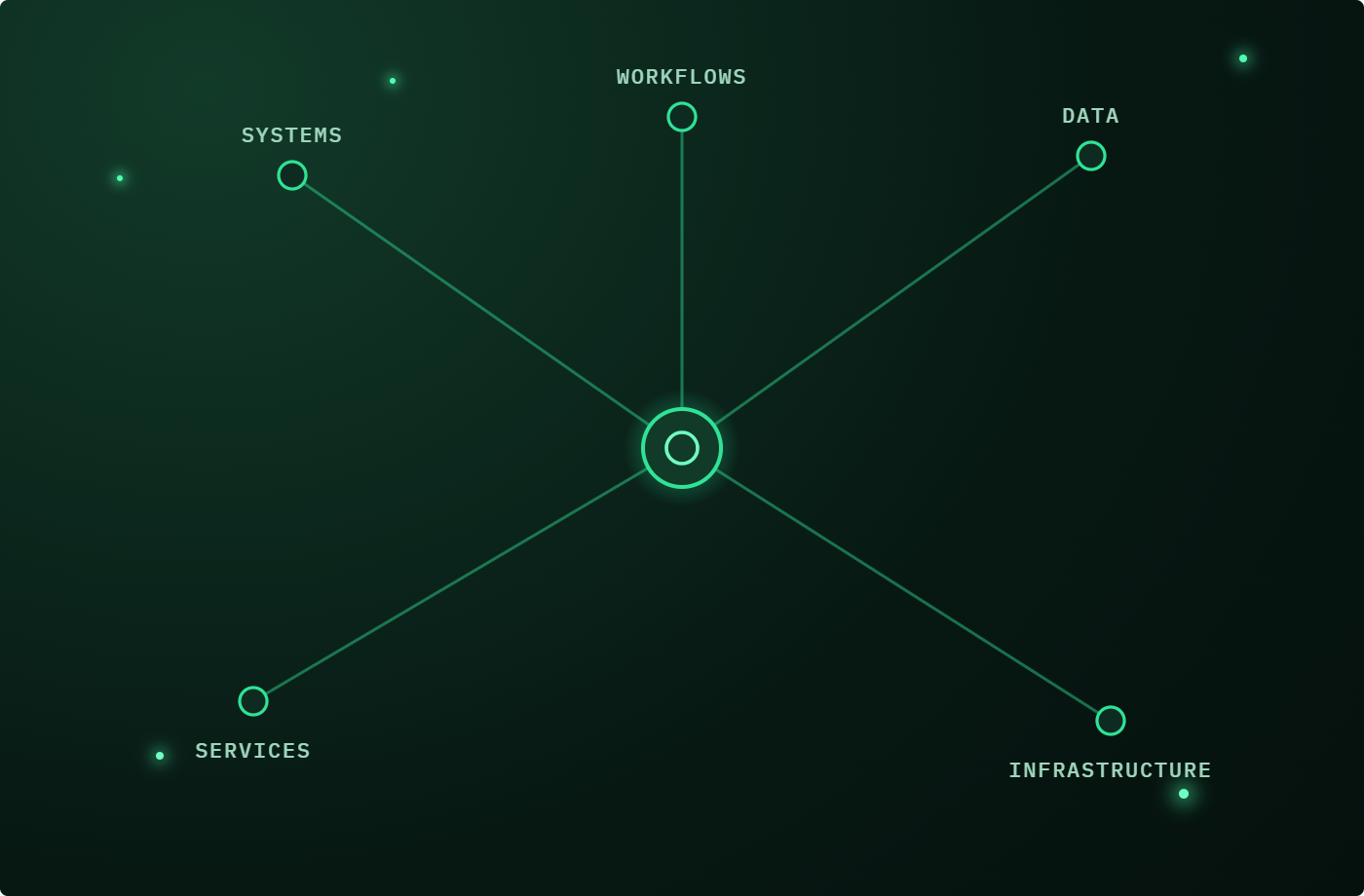
CBOS considers the wider technology environment when designing bespoke software so that new applications can interact with the systems, data, services, and infrastructure already within the organisation.

From the user's perspective, the process can remain simple even when the technology behind it is complex.

A staff member might perform one action while the platform retrieves customer information from one system, checks pricing from another, creates a transaction somewhere else, updates a workflow, and returns the result through a single interface.

The technology manages the complexity rather than passing it on to the user.

Future-Proof

Solutions are designed to accommodate future growth, integration, automation, data, cloud, and artificial intelligence capabilities.

The system you build today should not restrict what the business can do tomorrow.

Software architecture therefore needs to consider not only today's functionality but future scalability, integrations, data requirements, automation, cloud services, mobile access, APIs, and artificial intelligence.

This is becoming increasingly important as businesses adopt AI.

AI becomes significantly more useful when it has reliable systems to interact with, structured data to work from, and digital processes through which it can take action.

A well-designed bespoke technology environment can therefore create the foundation for future automation and AI capabilities that may extend far beyond the initial system.

Business Impact

Bespoke software creates measurable value by improving efficiency, visibility, control, customer experience, and the ability to scale.

The value of bespoke software is ultimately measured by what changes after it is implemented.

For some organisations, the biggest benefit is eliminating hours of repetitive administration. For others, it is connecting previously disconnected systems, giving management visibility across the organisation, improving customer service, creating greater process control, or allowing the business to scale without continually adding people to manage administration.

In other cases, the value is strategic. The technology enables a new product, service, operating model, or customer experience that would otherwise not have been possible.

The strongest bespoke solutions often create several of these benefits at the same time.


Bespoke software becomes most valuable when technology stops being something the business has to work around and starts becoming an integral part of how the organisation operates.

The Pain Point

Existing technology often creates friction when systems, processes, and business requirements no longer work effectively together.

Businesses often reach a point where their existing systems can no longer support the way they need to operate.

Processes may have evolved over many years, with technology added incrementally along the way.

The result is often a mixture of spreadsheets, emails, manual approvals, disconnected software platforms, duplicated information, legacy applications, and employees filling the gaps between systems.

In other cases, an organisation may already use an established ERP, CRM, accounting platform, or industry-specific application, but there are important parts of the business that those systems simply do not address.

Off-the-shelf software can then begin determining how the business operates rather than supporting how the business should operate.

The need was clear: Gallo Images required a trusted technology partner that could stabilise their existing systems, modernise their architecture, and help them pivot towards continuous innovation in a dynamic and highly competitive market.


This creates major problems:

  • Employees spend time performing repetitive administrative tasks.
  • The same information is captured in multiple systems.
  • Processes depend heavily on spreadsheets, email, or individual employees.
  • Management struggles to obtain a single view of the business.
  • Existing systems do not communicate with one another.
  • Important processes are difficult to control or audit.
  • Customers and staff experience fragmented digital journeys.
  • Legacy systems become difficult and expensive to maintain.
  • Growth creates additional administration instead of greater efficiency.
  • Businesses compromise their processes to fit the limitations of existing software.

The problem is not always that a business needs more software. Often, it needs better-connected software designed around the way the organisation actually needs to work.

What CBOS Offers

CBOS creates purpose-built software around your organisation, connecting processes, people, data, and existing technology.

CBOS designs and develops software specifically around your organisation, its processes, its users, and its objectives.

Rather than starting with a predefined product and trying to make the business fit into it, we start by understanding the problem.

  • What needs to happen?
  • Who needs to use the system?
  • Where does the information come from?
  • What business rules need to be applied?
  • What existing systems must remain?
  • Where are people currently performing unnecessary manual work?
  • What does management need to see?
  • What should the customer experience look like?
  • We then design the technology around those requirements.

The result may be a complete business platform, a customer portal, an internal operational application, a mobile application, a workflow system, an integration layer, or a combination of several technologies working together.


CBOS can take a business from: “We have people, spreadsheets and systems trying to hold this process together.”

to: “We have one digital process that manages it properly.”

How it Works

We take your solution from understanding the business requirement through design, development, integration, deployment, and ongoing evolution.

Bespoke development starts with understanding the business before deciding what technology should be built.

Understand

We work with stakeholders to understand the organisation, its objectives, existing technology, users, processes, pain points, and opportunities.


This may include:

  • Business processes
  • Existing applications
  • Manual workflows
  • Spreadsheets
  • Reporting requirements
  • Customer journeys
  • Approval processes
  • Data sources
  • Security requirements
  • User roles
  • Existing infrastructure
  • Integration requirements
  • Future growth requirements

The objective is not simply to document what happens today. It is to understand what the business is trying to achieve and where technology can improve it. 

Design

We translate the business requirements into a practical software solution that reflects how the organisation operates and what it needs to achieve. The design considers the overall structure of the application, how users interact with it, how information and workflows are managed, and how it will connect with the wider technology environment. It also establishes the foundations for security, reporting, mobile access, infrastructure, and future growth.

The aim is to create a solution that is practical today while providing a strong foundation that can evolve with the organisation.

Build

Our development teams turn the agreed solution into working software.

Development is iterative, allowing functionality to be reviewed and refined as the project progresses rather than waiting until the end to determine whether the system meets the business requirement.

Integrate

Most bespoke systems do not operate in isolation.

CBOS connects new software to the platforms and information already used by the organisation so that data and processes can move between systems without employees having to act as the connection between them.


Solutions can integrate with environments such as:

  • ERP, CRM, and accounting systems
  • Microsoft 365 and identity platforms
  • Payment and financial services
  • Data warehouses and reporting platforms
  • Cloud platforms and external APIs
  • Supplier and customer systems
  • Existing business applications
  • Legacy or industry-specific systems

Deploy

Once the solution is ready, we manage the technical process of taking it into a live production environment.

This includes the infrastructure, databases, security, access, testing, monitoring, backups, and production configuration required to operate the solution reliably.

Evolve

A business does not stop changing once the software goes live.

New requirements emerge, processes improve, integrations are added, and technology continues to develop.

CBOS can continue supporting and enhancing the platform so that the software evolves with the organisation rather than gradually becoming another legacy system.

What We Can Build

From operational platforms and portals to mobile applications and integrations, we build around the problem that needs solving.

There is no predetermined form that a bespoke solution has to take.

For one organisation, it may be a central operational platform connecting dozens of locations. For another, it could be a customer self-service portal. Another may need a specialised workflow application, mobile platform, supplier system, reporting solution, integration service, digital asset management environment, or completely new digital product.

A single solution may also combine several of these capabilities.

What matters is not the type of application.

What matters is the problem it solves.

The technology is chosen around the requirement rather than allowing a particular product or platform to determine what the business can and cannot do.

Why it Matters

Well-designed software reduces operational friction and creates more efficient, connected, consistent, and scalable ways of working.

The right bespoke software can fundamentally change the way an organisation operates.

Many inefficient processes exist because people are doing work that technology should be doing.

Employees move information between systems. They check whether approvals have happened. They maintain spreadsheets. They compile reports. They send follow-up emails. They remember business rules. They search for information. They act as the link between processes that were never properly connected.

Well-designed software removes much of this friction.

Information can be captured once and used throughout the process. Approvals can be routed automatically. Business rules can be applied consistently. Management information can be available in real time. Customers can complete routine activities themselves. Different systems can exchange information without human intervention.

The result is greater efficiency, consistency, visibility, control, and scalability across the organisation.


Good bespoke software does more than digitise an existing process. It creates an opportunity to rethink how that process should work.

Bespoke vs Shelf

Custom software becomes valuable when standard solutions can no longer support your processes, complexity, or strategic requirements.

Bespoke software becomes particularly valuable when a process is important enough to the organisation that compromising it to fit a generic product no longer makes sense.

This often happens when businesses have unique workflows, complex approval structures, multiple locations, specialised customer journeys, proprietary business rules, or several existing systems that need to operate together.

It is also valuable when spreadsheets and manual administration have become business-critical, when legacy technology is preventing further growth, or when the organisation wants to create a digital capability that simply does not exist as an off-the-shelf product.

Custom software can also become a competitive advantage.

If a particular process, service model, customer experience, operational methodology, or piece of intellectual property differentiates your organisation, technology can help embed that advantage into the way the business operates.

Example Use Cases

See how bespoke technology can solve common operational, customer, integration, legacy, and business growth challenges.

A Multi-Branch Organisation


"Every branch manages the same process differently."

CBOS can develop a central platform that standardises the core process across the organisation while still accommodating different branches, regions, users, products, or operational requirements.

The individual locations retain the functionality they need while management gains consolidated visibility across the entire network.

An Operations Team


“Our process runs through spreadsheets, emails, and several different systems.”

CBOS can transform that process into a structured digital workflow.

Information is captured once, responsibilities are clear, approvals move automatically to the correct people, records are retained, and management can see where every item sits without manually chasing updates.

A Customer-Facing Business


“Customers contact our staff for things they should be able to do themselves.”

CBOS can create a secure customer platform where users can access information, submit requests, upload documentation, manage their account, track progress, or interact directly with relevant business services.

Customers receive a better experience while employees spend less time handling routine administration.

A Business With Legacy Technology


“This application is critical to our business, but it is becoming increasingly difficult to maintain.”

Replacing a business-critical system overnight may introduce unnecessary risk.

CBOS can develop a phased modernisation strategy, progressively replacing or rebuilding parts of the platform, introducing new services around it, improving the user experience, and moving the organisation towards a more modern architecture without unnecessarily disrupting operations.

A New Digital Idea


“We understand the opportunity, but we need someone to build the technology.”

CBOS can take a digital idea from concept through requirements, design, architecture, development, deployment, and ongoing evolution.

You bring the industry knowledge, business model, and opportunity.

We provide the technology capability required to turn it into a working product.

Built to Fit

Your processes, rules, structures, and requirements are embedded into software designed specifically for your organisation.

One of the greatest advantages of bespoke software is that the organisation's own rules can become part of the technology.

Different customer types can follow different processes. Approval limits can reflect organisational structures. Pricing can respond to customer, supplier, product, or contractual conditions. User access can be determined by role or location. Operational exceptions can trigger different workflows.

Instead of relying on employees to remember and manually apply these rules, the system helps manage them consistently.

This is when technology starts to become part of the operating model of the organisation rather than simply another application employees have to use.

Designed to Connect

New technology works with your existing systems to create a more connected and seamless operating environment.

Modern organisations rarely need another isolated system.

They need their technology to work together.

CBOS considers the wider technology environment when designing bespoke software so that new applications can interact with the systems, data, services, and infrastructure already within the organisation.

From the user's perspective, the process can remain simple even when the technology behind it is complex.


A staff member might perform one action while the platform retrieves customer information from one system, checks pricing from another, creates a transaction somewhere else, updates a workflow, and returns the result through a single interface.

The technology manages the complexity rather than passing it on to the user.

Future-Proof

Solutions are designed to accommodate future growth, integration, automation, data, cloud, and artificial intelligence capabilities.

The system you build today should not restrict what the business can do tomorrow.

Software architecture therefore needs to consider not only today's functionality but future scalability, integrations, data requirements, automation, cloud services, mobile access, APIs, and artificial intelligence.

This is becoming increasingly important as businesses adopt AI.

AI becomes significantly more useful when it has reliable systems to interact with, structured data to work from, and digital processes through which it can take action.

A well-designed bespoke technology environment can therefore create the foundation for future automation and AI capabilities that may extend far beyond the initial system.

Business Impact

Bespoke software creates measurable value by improving efficiency, visibility, control, customer experience, and the ability to scale.

The value of bespoke software is ultimately measured by what changes after it is implemented.

For some organisations, the biggest benefit is eliminating hours of repetitive administration. For others, it is connecting previously disconnected systems, giving management visibility across the organisation, improving customer service, creating greater process control, or allowing the business to scale without continually adding people to manage administration.

In other cases, the value is strategic. The technology enables a new product, service, operating model, or customer experience that would otherwise not have been possible.

The strongest bespoke solutions often create several of these benefits at the same time.


Bespoke software becomes most valuable when technology stops being something the business has to work around and starts becoming an integral part of how the organisation operates.

The CBOS Difference

CBOS approaches bespoke software as a business challenge first and a technology challenge second.

Our objective is not simply to write code or deliver a list of requested features.

We want to understand what the organisation is trying to achieve, why the existing process or technology is creating friction, and how a better solution could work.

Our capabilities across software development, cloud infrastructure, systems integration, data, automation, artificial intelligence, and technology strategy allow us to look beyond the application itself.

We consider how the software fits into the broader organisation: the people who use it, the business processes it supports, the information it depends on, the systems it communicates with, the infrastructure that runs it, the security that protects it, and the opportunities it can create in the future.

That broader view is what turns software development into business transformation.

What you will get


  Built for You

  End-to-End Expertise

  Built to Evolve

Contact us

The CBOS Difference

CBOS approaches bespoke software as a business challenge first and a technology challenge second.

Our objective is not simply to write code or deliver a list of requested features.

We want to understand what the organisation is trying to achieve, why the existing process or technology is creating friction, and how a better solution could work.

Our capabilities across software development, cloud infrastructure, systems integration, data, automation, artificial intelligence, and technology strategy allow us to look beyond the application itself.

We consider how the software fits into the broader organisation: the people who use it, the business processes it supports, the information it depends on, the systems it communicates with, the infrastructure that runs it, the security that protects it, and the opportunities it can create in the future.

That broader view is what turns software development into business transformation.

What you will get


  Built for You

  End-to-End Expertise

  Built to Evolve

Contact us

Purpose-Built Software

Designed around your business

Connected by
Design

Central visibility across international markets

End-to-End 
Delivery

From concept to continuous improvement

Built to 

Evolve

Flexible architecture that grows 

Purpose-Built Software

Designed around your business

Connected by
Design

Central visibility across international markets

End-to-End 
Delivery

From concept to continuous improvement

Built to 

Evolve

Flexible architecture that grows 

Let's Connect

Interested in building a smarter, more connected operation? Contact us to discuss how AI can support your business goals.

Let's Connect

Interested in building a smarter, more connected operation? Contact us to discuss how AI can support your business goals.